Arts & Culture
A Festival Campus, Fully Connected
Festival-grade network engineering for FoST Fest at Snug Harbor
At a Glance
- Client
- Future of Storytelling (FoST), an immersive media festival
- Venue
- Snug Harbor Cultural Center & Botanical Garden, Staten Island — 83 acres
- Problem
- Knit a dozen historic, landmarked buildings and open-field tents, spread across an 83-acre campus, into one resilient network capable of carrying thousands of high-bandwidth VR/AR devices, for a temporary, multi-day public event with zero tolerance for downtime.
- Services
- Temporary event network design · fiber and structured cabling · outdoor wireless · wireless point-to-point backhaul · self-healing redundant topology · on-site NOC and production coordination
- Platforms
- FortiGate firewall · Cisco switching · Ruckus wireless APs and controller · UniFi point-to-point · dedicated fiber WAN with cellular LTE failover
- Outcome
- Thousands of concurrent high-data devices supported across the campus. Live link failures absorbed invisibly by the self-healing design. The festival ran without a hitch.
The Brief
Immersive storytelling on a campus that was never wired for it
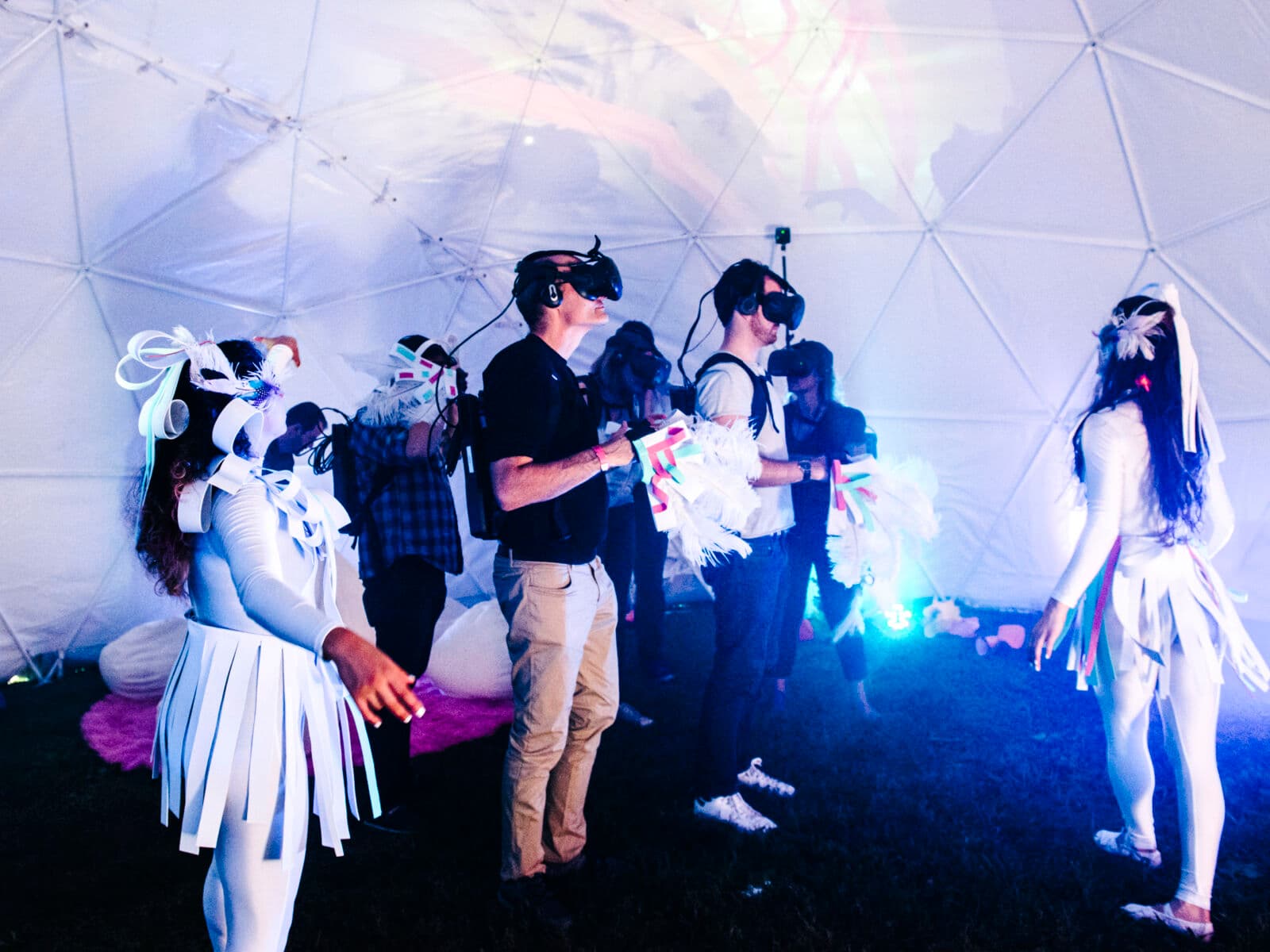
FoST Fest is the public face of the Future of Storytelling — a festival built around the newest VR, AR, AI, mixed-reality, haptics, and interactive-film work, with more than 100 exhibits and dozens of world and US premieres. After its New York debut, it moved to Snug Harbor on Staten Island: a sprawling cultural campus of nineteenth-century landmark buildings, gardens, and open lawns.
That setting is the entire problem. Immersive storytelling is bandwidth-hungry — headsets, sensors, live-streamed installations, and packed auditoriums — and it was scattered across a dozen buildings and tents that were never wired to talk to each other. Everything had to be temporary, everything had to come down cleanly afterward, and for the run of the festival it could not go down. A frozen headset or a dead access point in front of a thousand people isn't a support ticket; it's the show breaking.
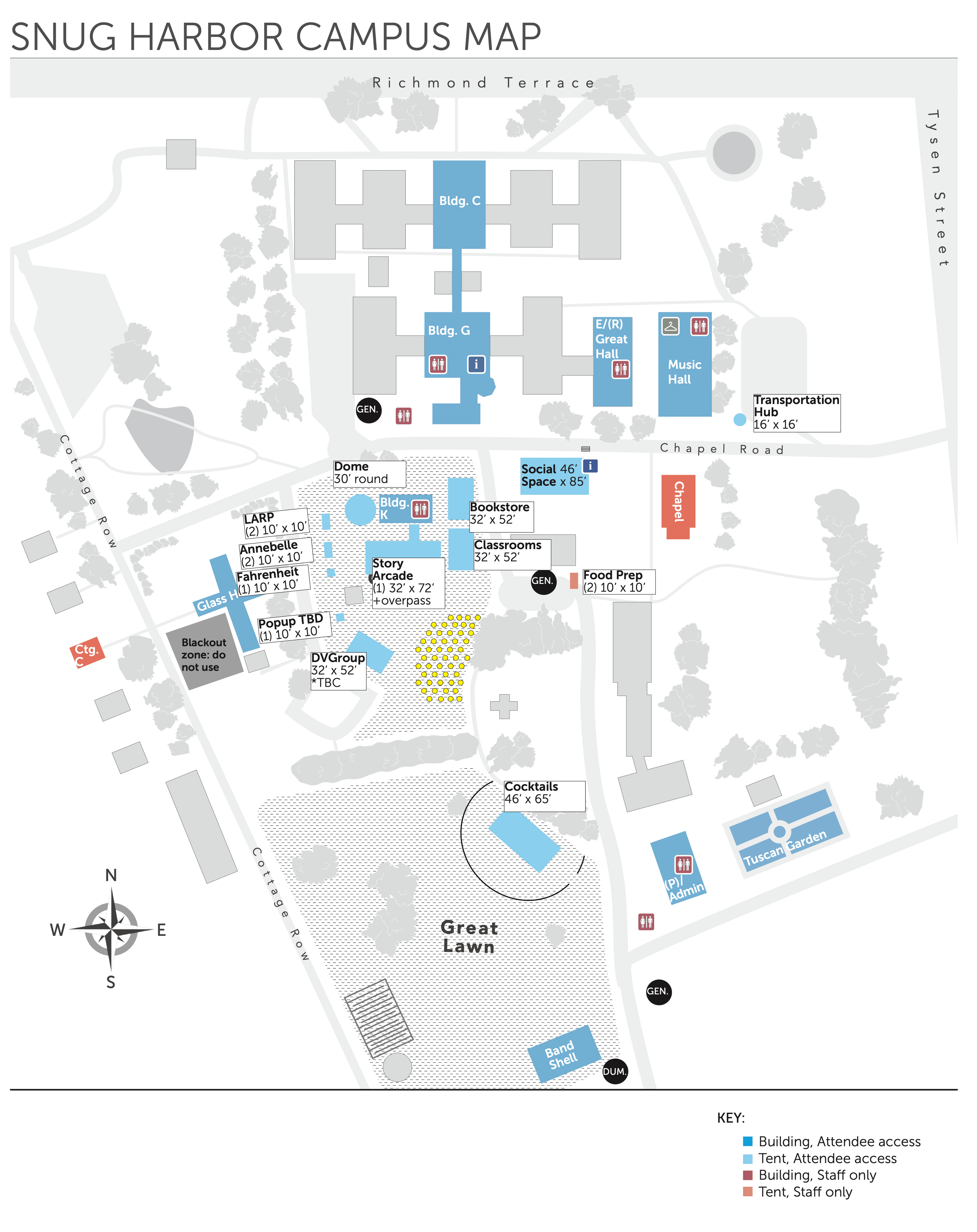
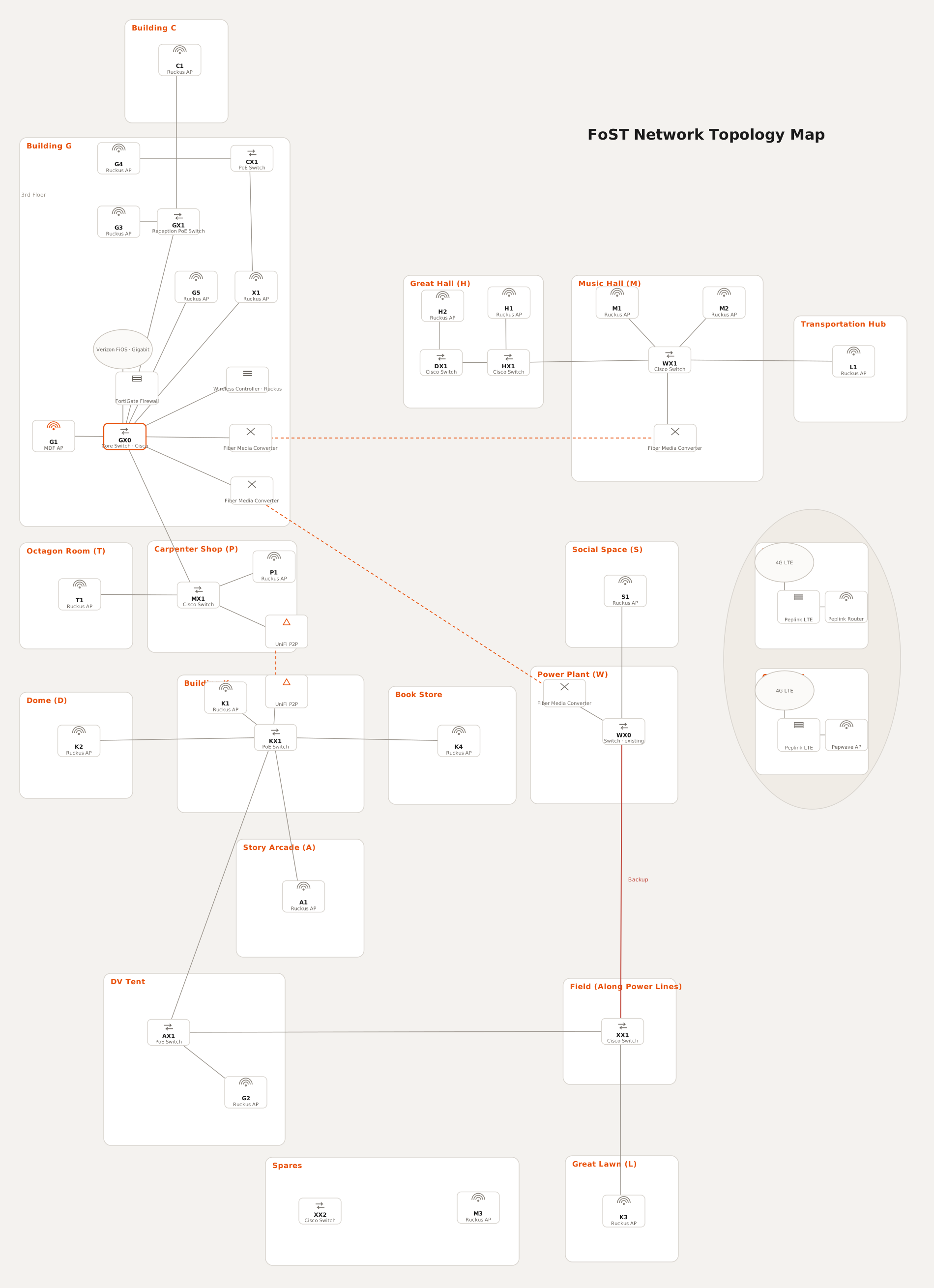
Every building on that map needed a network drop. Every tent, every outdoor installation, every auditorium filling with people running bandwidth-hungry headsets. The topology below is what we built to cover it.
The Build
Weeks in the basements and attics
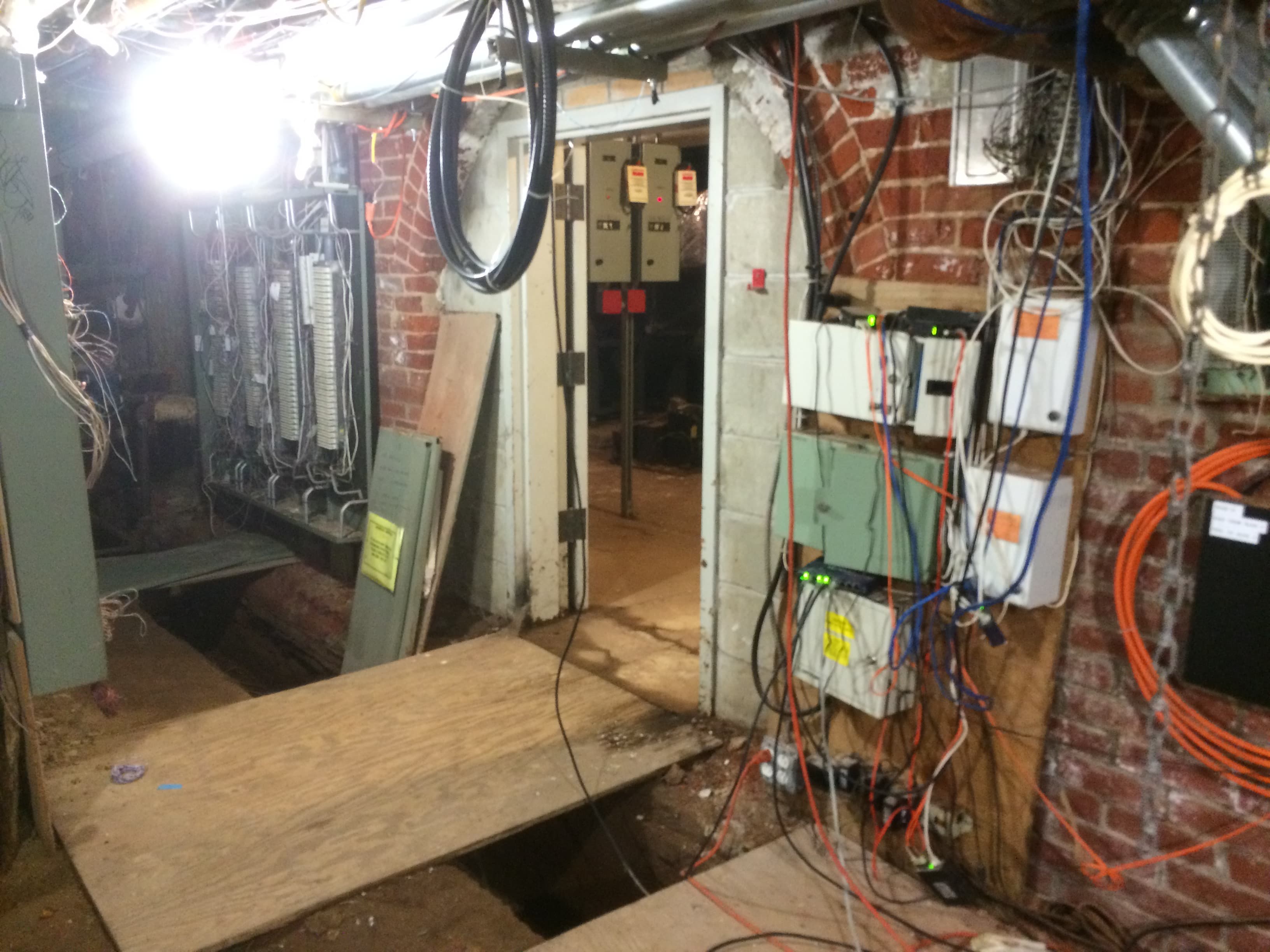
The festival ran for days. The network took weeks.
Long before the first attendee arrived, we were in the basements and attics of the Snug Harbor buildings pulling fiber and Ethernet, setting switches and access points, and landing data drops at every installation across the campus. A dedicated fiber gigabit circuit was brought in as the clean uplink — no contention with house systems, no surprises — with a cellular LTE connection standing by as an automatic backup if the primary ever dropped. From a central MDF in the main building, fiber runs reached out to the outlying halls, and each major building was given its own PoE distribution switch and its own cluster of access points sized to what that space actually needed.
None of that placement was guesswork. Every exhibit had different data demands — some just needed Wi-Fi for a handful of headsets, others were pulling live high-bandwidth feeds — so the build was planned drop by drop, in close coordination with each installation and with event production. By show time everyone on the team carried a radio.
Field Engineering
Reaching the tent
The hardest single drop wasn't a building. It was the middle of a field.
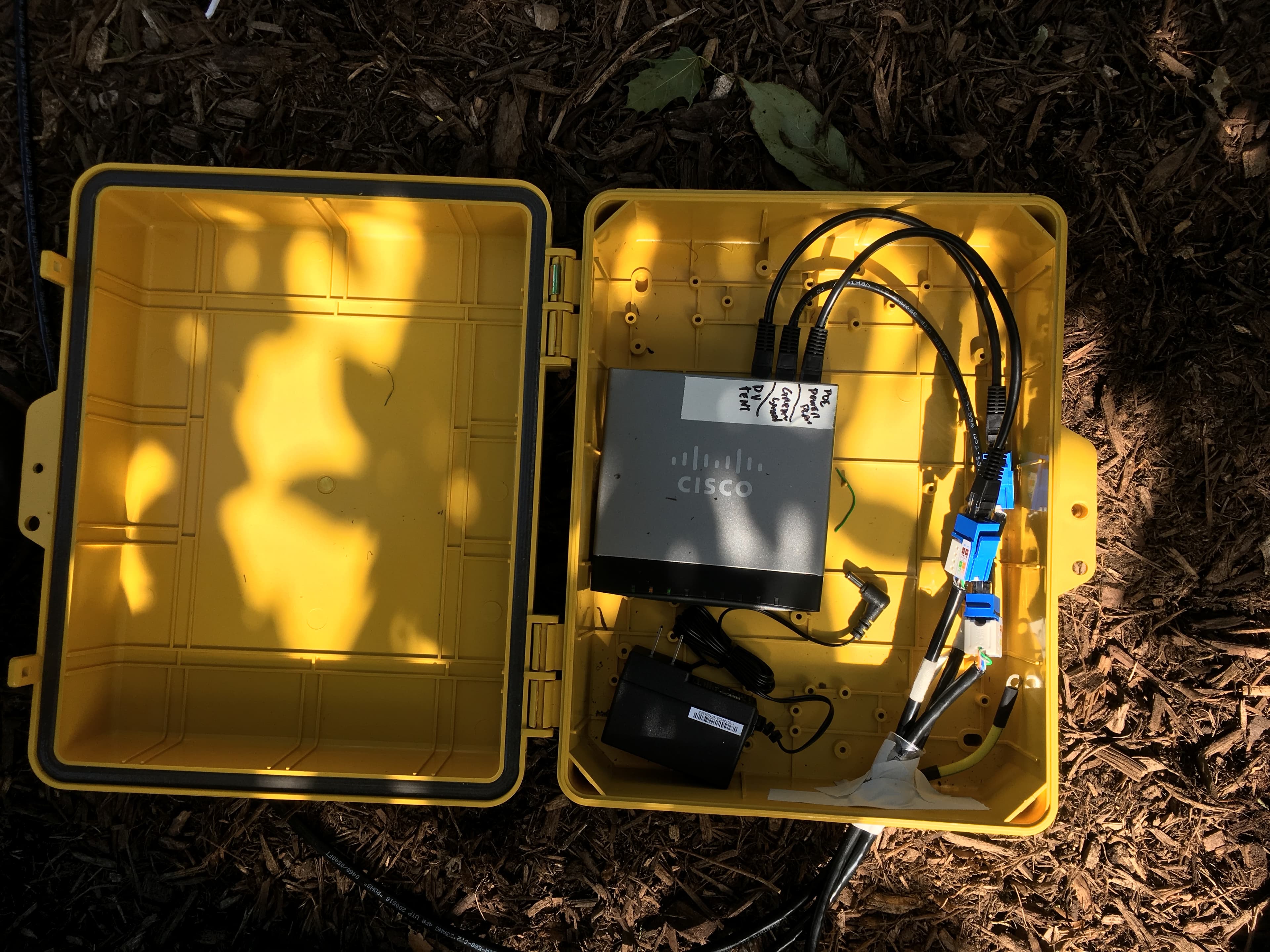
The main stage and a cluster of demos lived under a large tent on the Great Lawn — hundreds of feet from the nearest building, across open grass, with no infrastructure of any kind. We reached it the way you reach anything that far over copper: in stages. A roughly 300-foot outdoor Ethernet run left the nearest building and terminated at a sealed Pelican case tucked into the brush at the edge of the lawn. Inside that case sat a PoE-powered switch acting as a midspan relay. From there, a second 300-foot run carried the link the rest of the way out to the tent.
Two hops, six hundred feet, one waterproof case in the bushes — and a fully live network node in the center of a field.
The Architecture
Built to fail gracefully
A temporary outdoor network has a lot of ways to break. A buried run gets nicked, a media converter overheats in the sun, someone trips a cable behind a booth. The design assumed all of it.
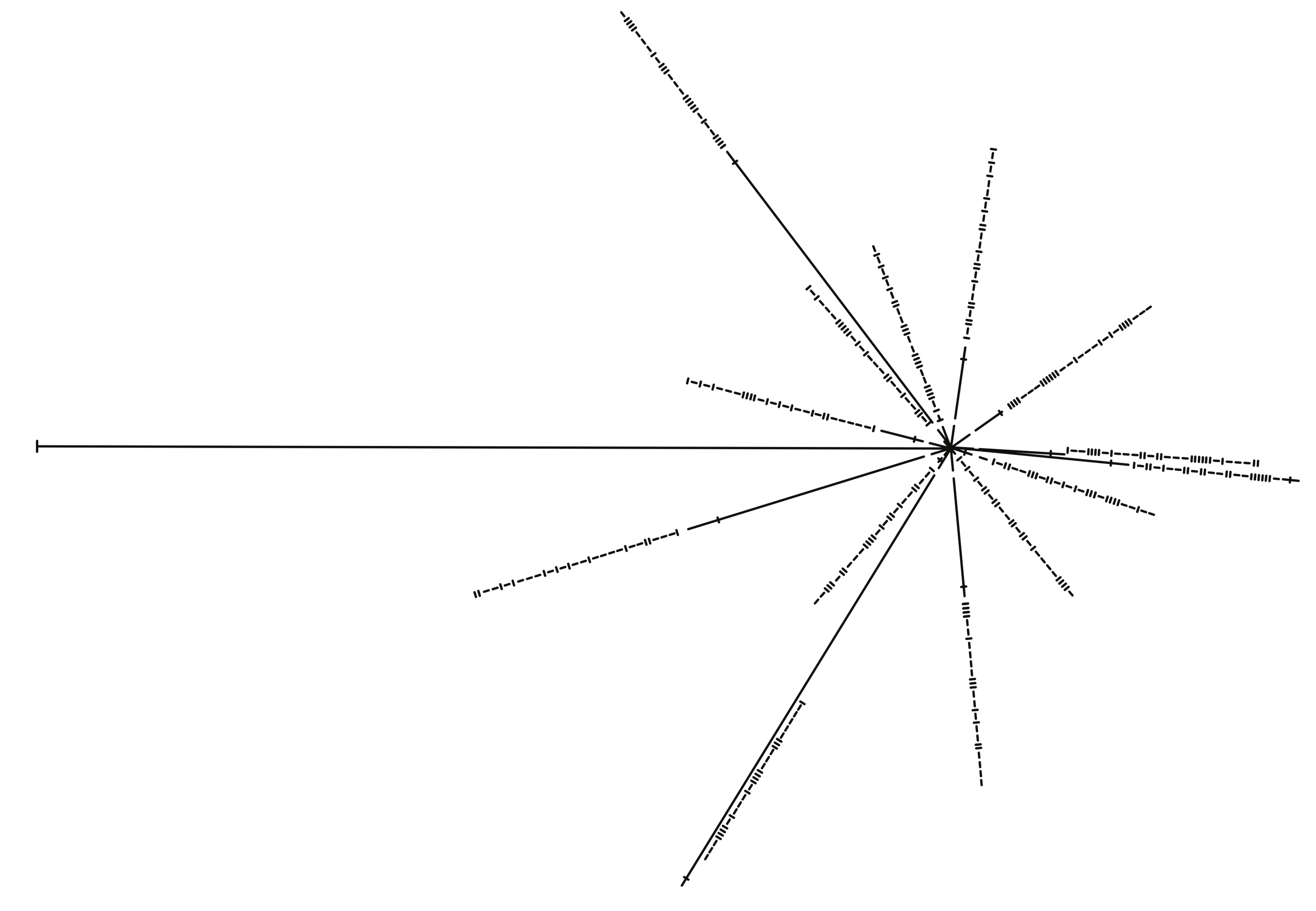
The backbone was deliberately built with more than one path between key points. Spanning Tree Protocol ran across the switching fabric with the core pinned as the root bridge, so the topology had a single, predictable brain deciding which links were active and which were standing by. Where a building was reached by fiber, it was also reachable by a wireless point-to-point shot — directional antennas aimed building-to-building as a hot backup. The wired path was always preferred; if it dropped, the network reconverged onto the wireless link and traffic kept moving. The internet uplink had the same logic: fiber first, cellular LTE as the fallback.
That's the whole philosophy: hardwired first, wireless as the safety net, and a loop-aware fabric that's allowed to have multiple paths precisely so it can lose one and keep running. Redundancy that nobody in the audience would ever see working.
Under Load
The stress test
The moment every event network secretly dreads came in one of the auditoriums.
A speaker, mid-presentation, turned to a thousand people and said some version of "okay, now everyone take out your phones and connect to the Wi-Fi." A thousand devices associating at once is, functionally, a friendly denial-of-service attack on your own wireless. One access point in the room hit its ceiling and seized. The others — same SSID, same controller, overlapping coverage — picked up the load and kept the room online. The talk continued. Nobody in the audience knew anything had happened.
That outcome wasn't luck. It came from over-provisioning the wireless with enterprise-grade access points, designing for overlapping coverage rather than minimum coverage, and running a local controller so the APs behaved as one coordinated system instead of a dozen islands fighting each other.
Equipment
The kit
Everything was enterprise-grade and everything lived in flight cases, built to be deployed fast, run hard for days, and strike clean:
- Firewall — FortiGate at the perimeter, behind a dedicated fiber gigabit circuit with cellular LTE failover
- Switching — Cisco PoE switches at the core and in each building, running Spanning Tree with a pinned root bridge
- Wireless — Ruckus access points, indoor and outdoor, managed by a local Ruckus controller
- Backhaul — fiber between core buildings, with UniFi point-to-point antennas as wireless failover
- Field reach — a sealed Pelican-case PoE relay extending two 300-foot outdoor runs to the Great Lawn tent
- Power — protected, conditioned power throughout
Production
Production as one team
A festival network isn't really an IT project — it's a production department that happens to run on packets. The build only worked because it was planned alongside the people mounting the exhibits and the people running the show: which booth needed what, where the crowds would be, when the auditoriums would fill, who to raise on the radio when something needed to move.
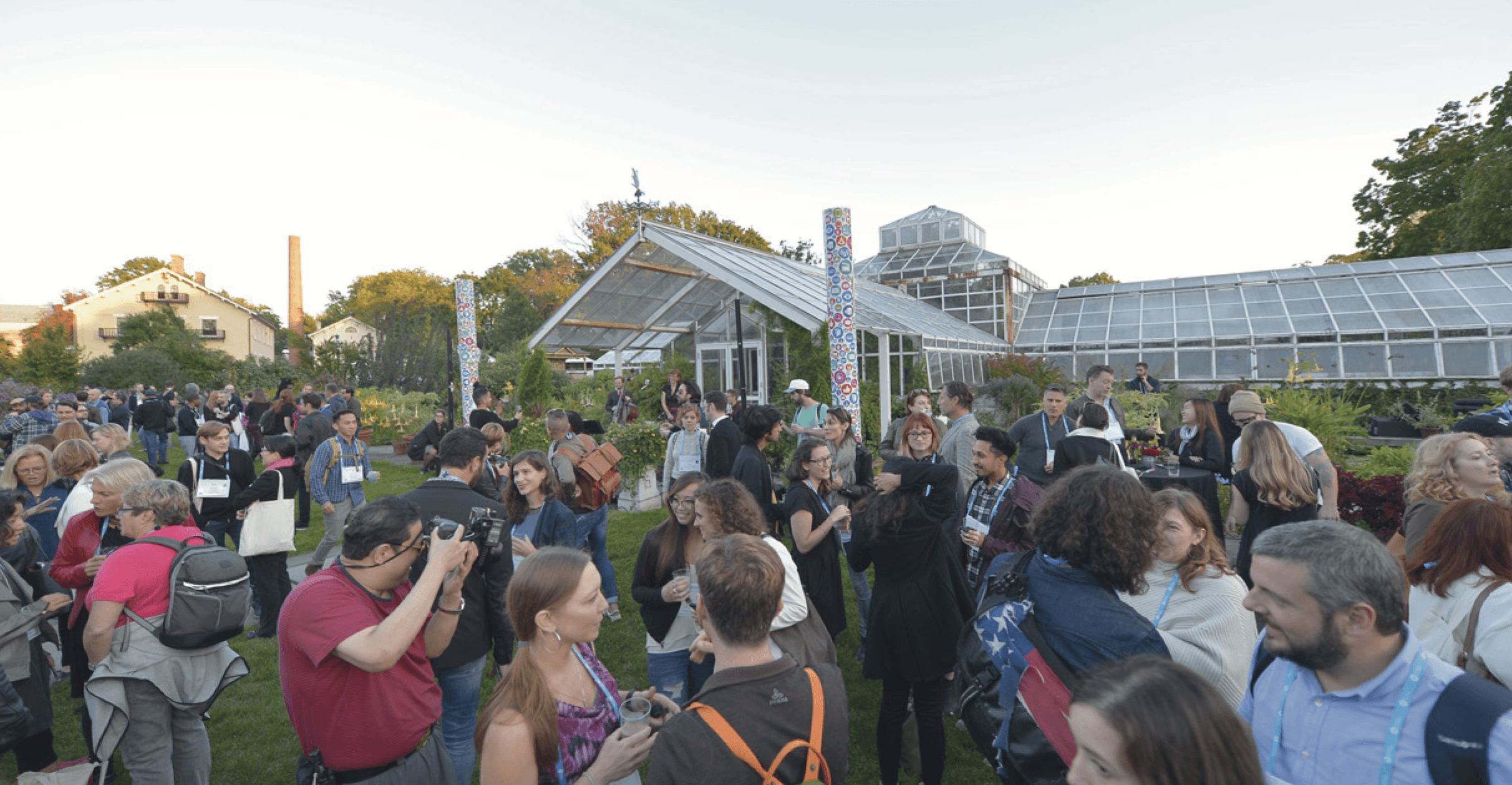
It came down as cleanly as it went up. Across the run of the festival and thousands of devices, the network did the one thing a live event demands of it: it disappeared. No dead air.
Outcomes
What we delivered.
- Thousands of concurrent high-data devices supported across an 83-acre campus
- Live link failures absorbed invisibly by the self-healing redundant topology
- Wireless controller coordination prevented auditorium overload from reaching the audience
- 600-foot outdoor Ethernet relay reached the Great Lawn tent with a single sealed Pelican case midspan
- Network struck cleanly after the festival — no permanent infrastructure, no trace
- The festival ran without a hitch
Wire the Whole Site
Need a whole campus connected, fast, then gone again?
We design temporary networks — fiber, point-to-point links, and outdoor Wi-Fi — that cover sprawling sites and pack up clean. Let's plan the connectivity for your event.
Let's TalkRelated
To bring connectivity to a temporary campus or festival, start with these services:
For the technology behind connecting a sprawling outdoor site, see our University guides on WiFi, fiber optics, and networking:
Another festival we connected end to end: