
Nonprofits
Campus-Wide Wireless for a Remote Nature Preserve
A point-to-multipoint wireless network for the National Audubon Society's Corkscrew Swamp Sanctuary — designed in New York, built in Florida, delivering 200 Mbps where major carriers declined to serve.
Background
A sanctuary that couldn't get online
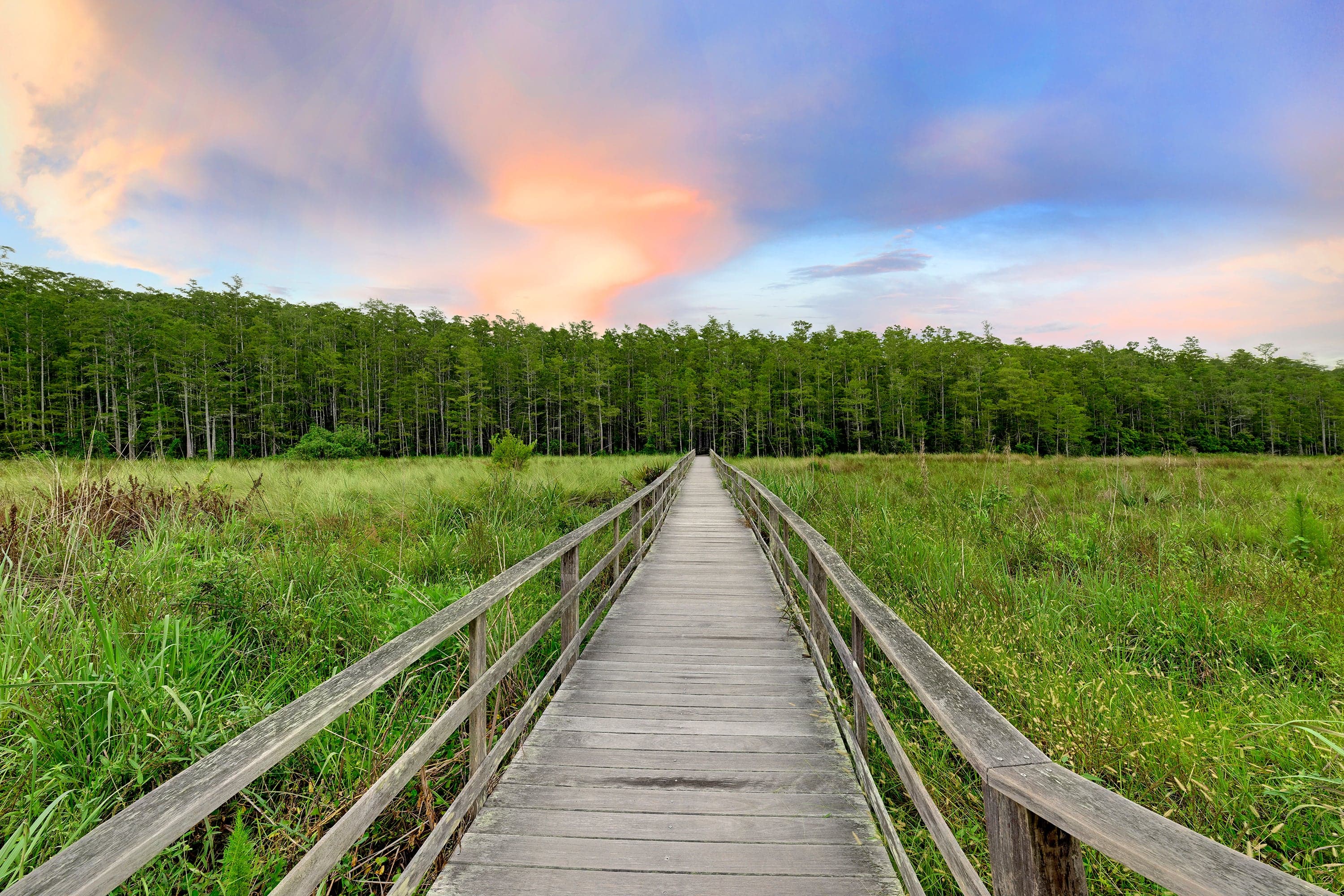
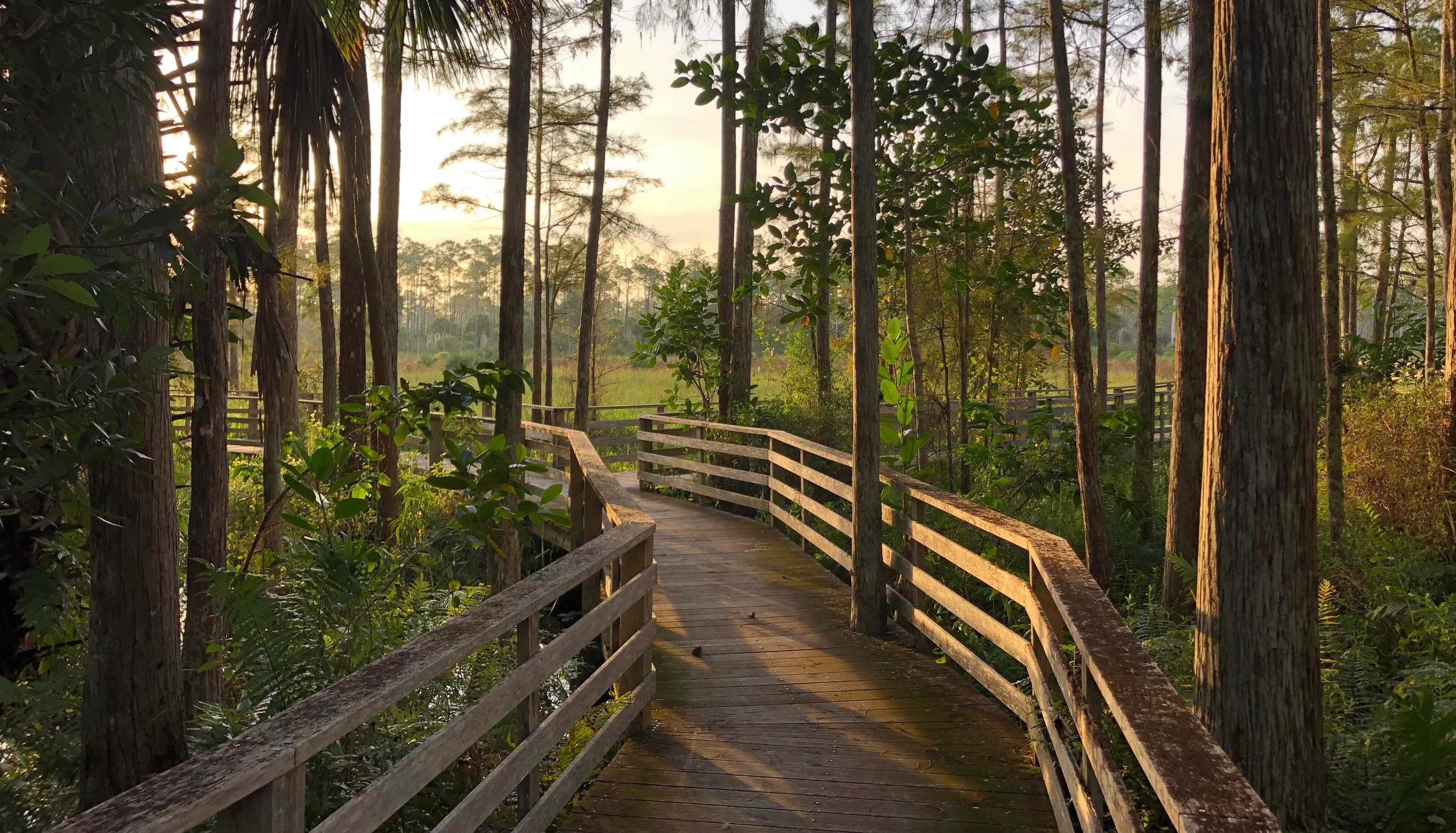
Corkscrew Swamp Sanctuary is one of the most significant conservation sites in North America — a remote nature preserve in rural Florida operated by the National Audubon Society, home to the largest old-growth bald cypress forest in the country and a premier bird-watching destination. The preserve depends on reliable connectivity for conservation work, education, visitor operations, and staff communications. For years, it had none.
Major carriers declined to serve the site. Earlier efforts to establish connectivity stalled repeatedly: permitting disputes with local authorities, vendor failures, and a project intermediary that went bankrupt mid-build — leaving an ISP that had invested in infrastructure unpaid and forced to withdraw. When a local provider eventually installed a 100-foot monopole on site, the sanctuary's buildings were still not wired. The physical assets were there. A functioning network was not.
RSystems was brought in to finish what others couldn't.
The Challenge
Years of stalled infrastructure, solved in months
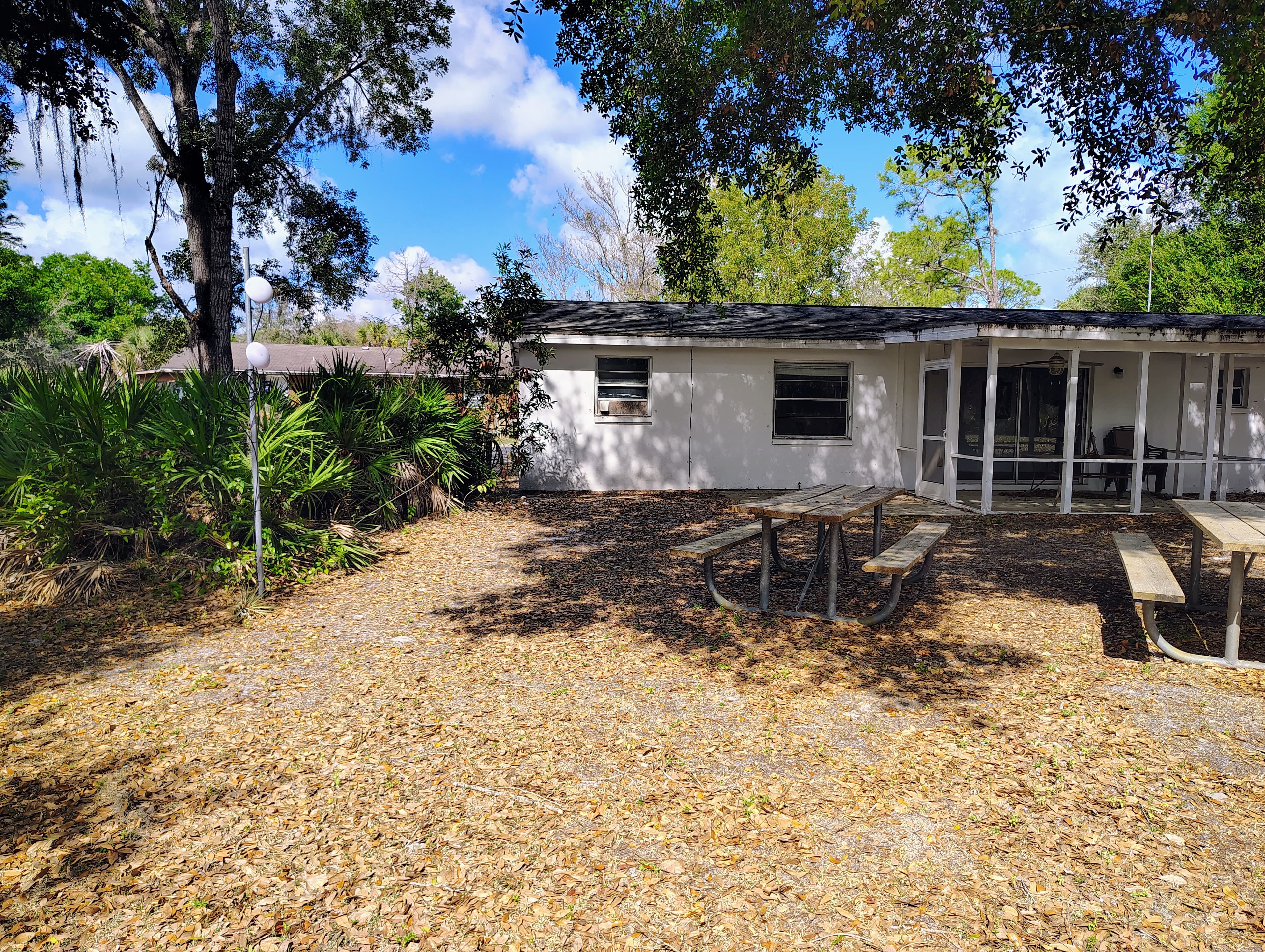
The task was to turn fragmented, abandoned physical assets into a reliable, scalable campus network — distributed across multiple buildings separated by wetlands, dense tree cover, and roughly a kilometer of open preserve.
The technical constraints were significant. The 5 GHz radio spectrum in the area included DFS channels shared with FAA and weather radar systems, which can force radios to vacate channels without warning. One building was partially obstructed by tree canopy. The entire project had to be designed, configured, and managed remotely — from over 1,000 miles away in New York City — while a Florida-based vendor handled crane work, mounting, and physical cabling.
On hardware: RSystems selected Unifi for the RF and access point layer, not because it carries no risk — Unifi's software QA is inconsistent, firmware updates have introduced bugs, and rollback options are limited — but because the price-to-performance ratio was the right call for this application, with that risk explicitly understood and managed. Core routing and switching used SonicWall and Cisco, where reliability is non-negotiable.
The Solution
The monopole becomes the hub
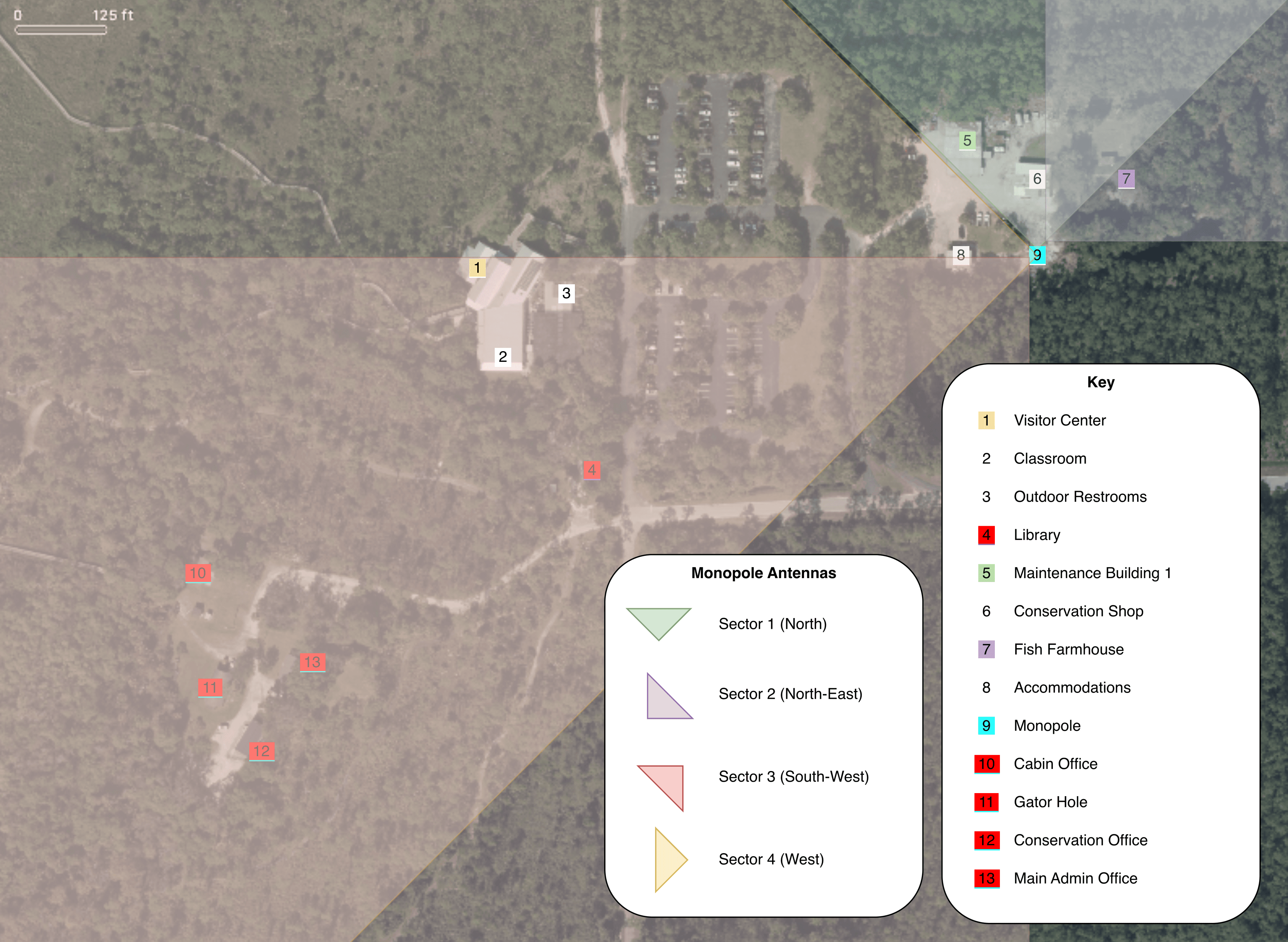
RSystems designed a point-to-multipoint wireless architecture using the existing monopole as the central distribution point for the entire campus.
Comcast fiber was brought to the site and terminated into a SonicWall firewall at the base of the tower. Behind the firewall, a 48-port Cisco PoE switch and UPS served as the distribution core. All of this equipment was installed inside a NEMA-rated outdoor rack with HVAC at the monopole base — weatherproofed and thermally protected for Florida's heat, humidity, and outdoor conditions.
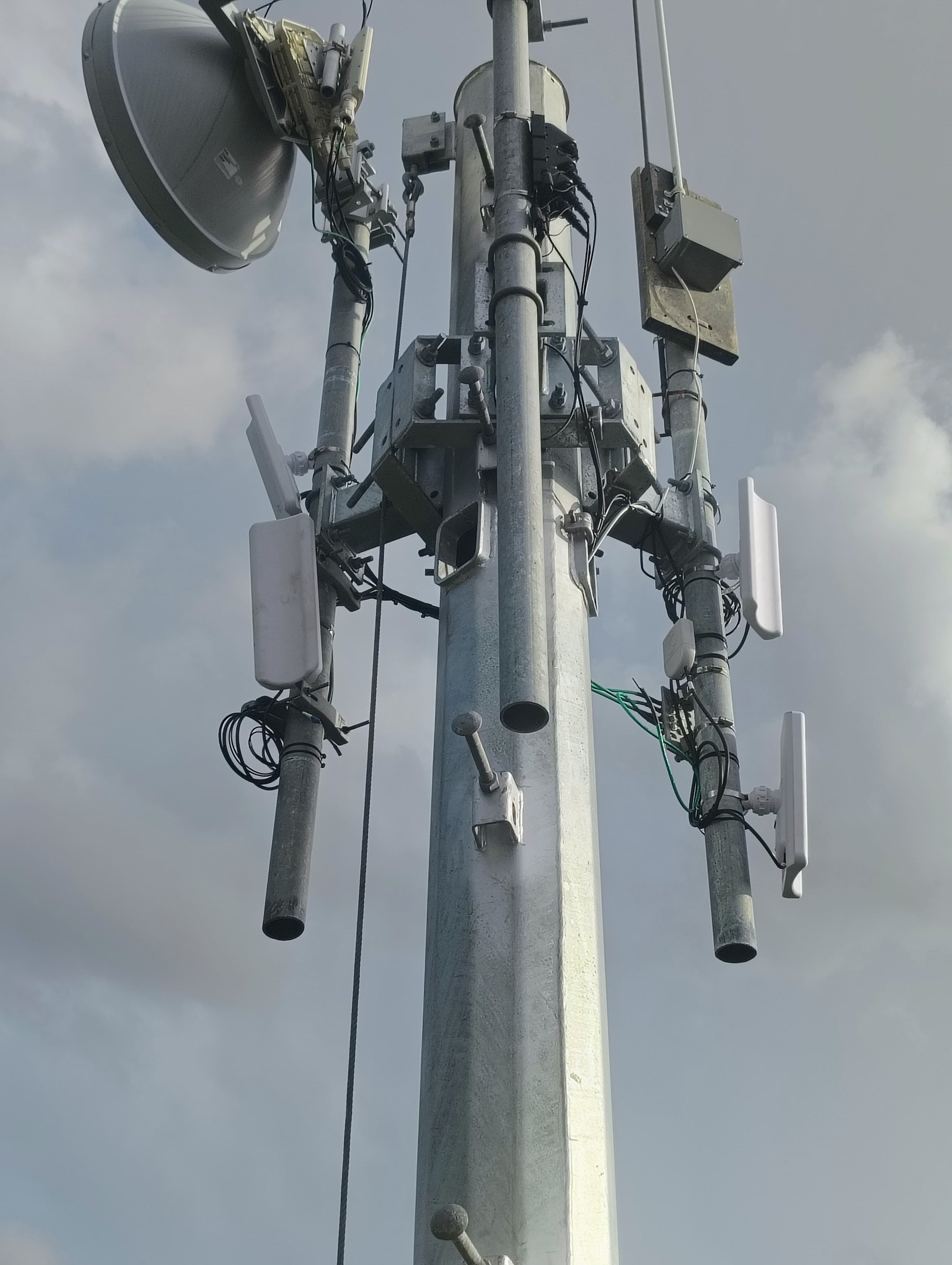
On the monopole itself, four Unifi Bridge Pro 90° antennas were mounted high on the tower. Their overlapping coverage sectors created approximately 270° of usable RF coverage across the preserve — operating in the 5 GHz band at effective ranges well within the antennas' 5 km capacity, giving ample signal margin for every building.
Each building on the property received a matching Unifi point-to-point radio aimed back at the appropriate sector on the monopole. Inside each structure, that radio fed a PoE switch, which powered indoor Unifi access points for local WiFi coverage. Additional PoE capacity was reserved at every site for future systems — cameras, environmental sensors, or additional coverage — without requiring any changes to the core network.
Remote Execution
Designed in New York, built in Florida
RSystems pre-configured all Unifi hardware before shipping equipment to the site. The Cloud Controller was used for ongoing management — not a physical Cloud Key, which would have introduced another point of failure in an already remote environment.
For the physical installation, RSystems provided the local Florida vendor with detailed documentation including precise compass bearings and mounting locations for each antenna — designed to be executed with a crane, by a crew that had never seen the network design. The antenna placement worked.
Channel and power optimization came next. RSystems tuned the 5 GHz spectrum carefully, navigating DFS channel constraints and local interference sources, and working through the adoption and reboot cycles typical of Unifi commissioning. The Visitor Center — initially delivering 5–10 Mbps due to signal overlap and interference — reached 200 Mbps after optimization.

Outcomes
What we delivered.
- Point-to-multipoint wireless campus network serving all buildings across the preserve
- SonicWall firewall + 48-port Cisco PoE switch in NEMA outdoor rack with HVAC at monopole base
- Four Unifi Bridge Pro 90° sectors providing ~270° coverage across the 5 GHz band
- Per-building point-to-point backhaul + PoE switch + Unifi WAPs for local coverage
- 200 Mbps real-world WiFi throughput campus-wide (1 Gbps fiber delivered to monopole)
- Visitor Center improved from 5–10 Mbps to 200 Mbps after RF optimization
- Unifi Cloud Controller for centralized remote management
- Domotz for ongoing monitoring and alerting
- Future-ready: extra PoE capacity at every building for cameras and sensors; Starlink failover planned
- Full execution managed remotely from NYC with local Florida vendor for crane and cabling work
Extend Your Coverage
Need Wi-Fi to reach across a campus or remote site?
We bridge wireless across buildings and open ground with point-to-multipoint links and outdoor access points built for the terrain. Let's map out coverage for your property.
Let's TalkRelated
To extend reliable wireless across a large or remote property, these services are where to begin:
For the technology behind wide-area wireless, see our University guides on WiFi and its vendors:
More wireless work for the same client: