
Networking
Multicast
Delivers traffic to multiple subscribed recipients using a single stream — between broadcast (everyone) and unicast (one recipient).
Multicast is a network addressing method that delivers traffic to multiple specific recipients simultaneously using a single stream. Unlike broadcast (everyone gets it) or unicast (one recipient), multicast sends to a group of subscribed receivers.
Standard unicast sends a separate copy of traffic to each recipient. If 50 devices want the same video stream, that's 50 individual streams from the source. Multicast sends one stream; the network replicates it only at points where the path diverges toward different receivers.
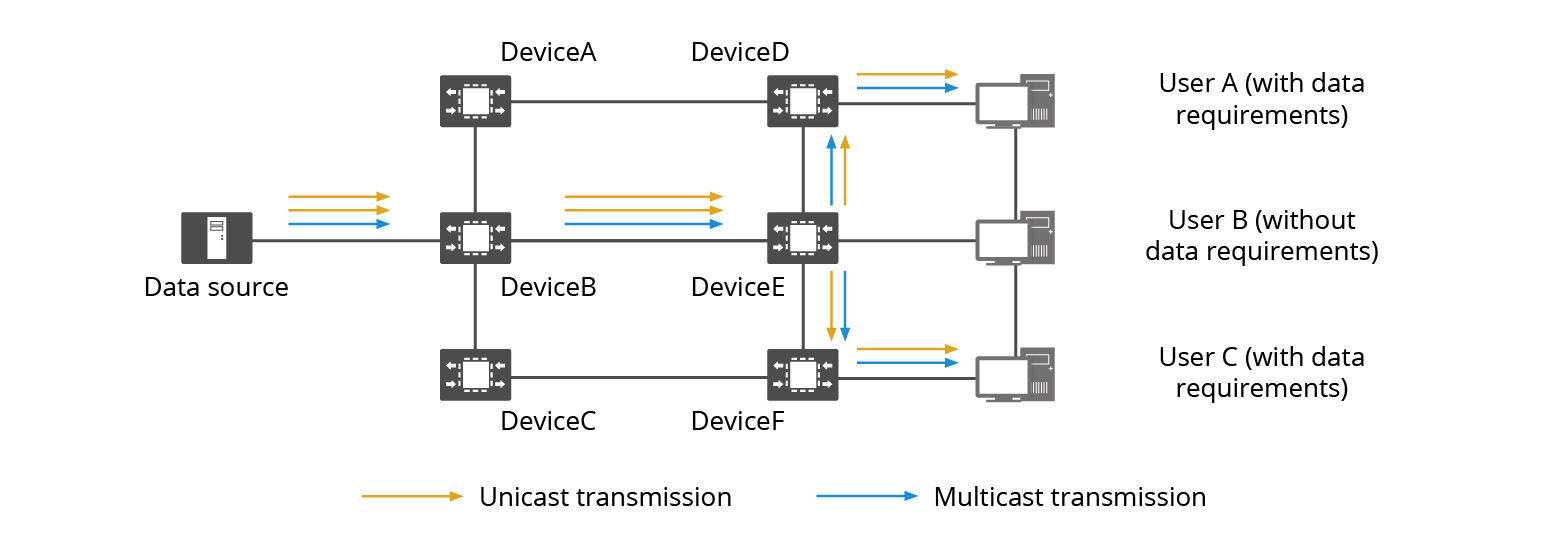
The addresses used for multicast are in the 224.0.0.0 to 239.255.255.255 range in IPv4. Devices subscribe to a multicast group using IGMP (Internet Group Management Protocol), telling the nearest router/switch they want to receive traffic for that group.
Where multicast shows up in practice:
AV over IP — video distribution systems often use multicast to send the same video feed to multiple displays without multiplying WAN or backbone bandwidth.
IP camera systems — some VMS (Video Management System) platforms use multicast for live feeds to multiple viewing stations.
OSPF and other routing protocols — use multicast addresses to communicate between routers without flooding the entire network.
IPTV and digital signage — delivering the same content stream to many endpoints.
For multicast to work across VLANs and switches, IGMP snooping should be enabled on your switches — it prevents multicast traffic from being flooded to all ports and instead delivers it only to ports with subscribed receivers.