Nonprofits
Replacing a 10-Year-Old Data Center — Without Replacing the Hardware
Multi-region Azure infrastructure, disaster recovery, and infrastructure-as-code for a nationally distributed conservation organization with a global growth roadmap.
Background
A colocation stack past its expiration date
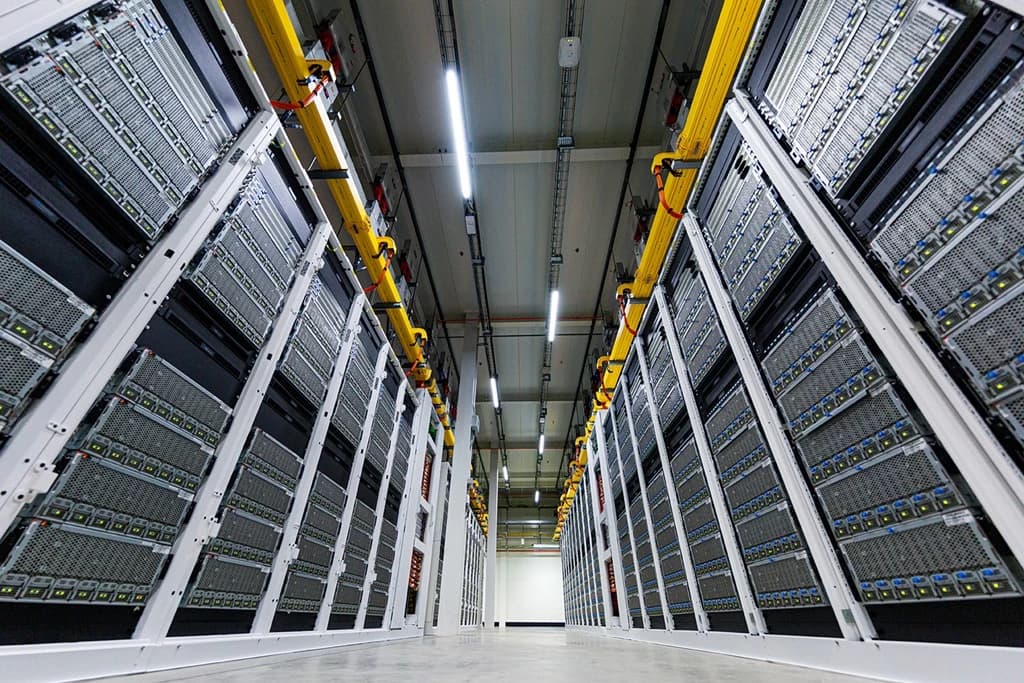
The National Audubon Society's core IT infrastructure had run for over a decade out of the Cologix colocation facility in New Jersey — VMware-based, aging, and overdue for replacement. The organization also had a substantial AWS footprint, a growing remote workforce, and plans for international expansion.
The existing backup solution covered data protection but not disaster recovery. In practical terms, that gap was showing up in insurance premiums. Audubon needed a DR-capable infrastructure that could protect their most critical systems, support an eventual migration away from Cologix, and scale to serve a globally distributed organization — without the cost and ceiling of another hardware refresh.
The Decision
Cloud as infrastructure, not just storage
A direct hardware replacement at Cologix would have been expensive, extended the life of systems already scheduled for retirement, and still left the DR gap unresolved. Azure offered a different path: build the disaster recovery infrastructure first, establish the migration pathway second, and design the whole thing to scale globally from day one.
RSystems recommended a phased, iterative engagement — a fixed monthly scope with collaborative prioritization rather than a rigid fixed-price contract — given the number of architectural unknowns at the start of the project. Everything would be built and validated in an isolated development subscription before touching production.
The Approach
Infrastructure-as-code from day one
Rather than configuring Azure through the portal, RSystems built the entire infrastructure in Terraform — the industry-standard platform for infrastructure-as-code. That decision had compounding benefits throughout the engagement.
During development, Terraform let the team tear down the entire build between sessions, eliminating idle compute costs. When architectural decisions changed, a single script edit and a rebuild replaced what would otherwise have been hours of manual reconfiguration. And when it comes time to extend the infrastructure into a new region, the same modules that built the primary environment can be reused with minimal modification.
What Was Built
Phase by phase, over six months
The project ran across five phases:
Network Connectivity
Azure Virtual WAN (vWAN) was deployed as the networking foundation. Rather than manually maintaining point-to-point peering rules between Azure regions, Cologix, and AWS, vWAN creates a central hub that handles any-any routing automatically. Traffic between Azure and Cologix, between Azure and AWS, and between Azure regions all routes through vWAN — over Microsoft's private fiber backbone, not the public internet. The architecture was designed to accommodate additional regional hubs without redesigning the core.
Azure Site Recovery
ASR was configured for three scenarios: VMware-to-Azure failover (protecting the Cologix stack), Azure-to-VMware failback, and Azure-to-Azure replication across regions. This is the "pilot light" model — protected VMs replicate continuously, but Azure runs no active compute in the secondary region until a failover is triggered. The cost is storage only — approximately $25 per VM per month — compared to running a full parallel environment. For an organization with dozens of protected systems, the economics are compelling.
Virtual Machines
A pair of domain controllers and a pair of Okta sync agents were deployed natively in Azure, establishing the identity foundation for cloud-hosted workloads. The Terraform modules built for this phase are reusable for every future VM deployment.
Production
Protected VMs in Cologix began replicating to Azure, meeting the disaster recovery and insurance requirements that initiated the project. The lift-and-shift pathway — moving workloads fully into Azure — was established and ready for execution.
Outcomes
What we delivered.
- Multi-region Azure infrastructure built entirely in Terraform, from scratch
- Azure Virtual WAN connecting two Azure regions, Cologix VMware, and AWS in a single routing mesh
- Azure Site Recovery configured for VMware-to-Azure, Azure-to-VMware, and Azure-to-Azure disaster recovery
- DR and insurance requirements met at ~$25/VM/month
- Domain controllers and Okta sync agents deployed natively in Azure
- Infrastructure designed for future regional expansion without core redesign
- Reusable Terraform modules for all future VM, network, and DR deployments
- Phased delivery over six months, on time and on budget
Retire the Data Center
Running on a data center that's living on borrowed time?
We migrate aging on-premises systems to Azure with disaster recovery and backup built in, so you stop maintaining hardware and start running in the cloud. Let's plan your move.
Let's TalkRelated
To retire aging on-premises hardware and move to Azure, start with these services:
For the concepts behind a cloud migration, see our University guides on virtualization and networking:
More cloud migrations we've delivered: