
Networking · Cloud & Infrastructure
SD-WAN
Also known as: Software-Defined Wide Area Network
Intelligently routes traffic across multiple internet circuits instead of relying on one expensive leased line.
SD-WAN (Software-Defined WAN) is an approach to managing wide area network connections that uses software to intelligently route traffic across multiple internet circuits — fiber, cable, LTE — rather than relying on a single expensive leased line.
Traditional multi-site connectivity meant MPLS circuits — private, reliable, carrier-managed, and expensive. SD-WAN was born from the observation that multiple commodity internet links, intelligently managed, can provide equivalent or better performance at a fraction of the cost.
An SD-WAN appliance at each site monitors the performance of all available WAN links in real time — measuring latency, jitter, and packet loss. It routes traffic dynamically based on these metrics: voice calls go over the lowest-latency path, backup traffic goes over whatever's cheapest, and if a link degrades below a threshold, traffic automatically fails over to the next best option.
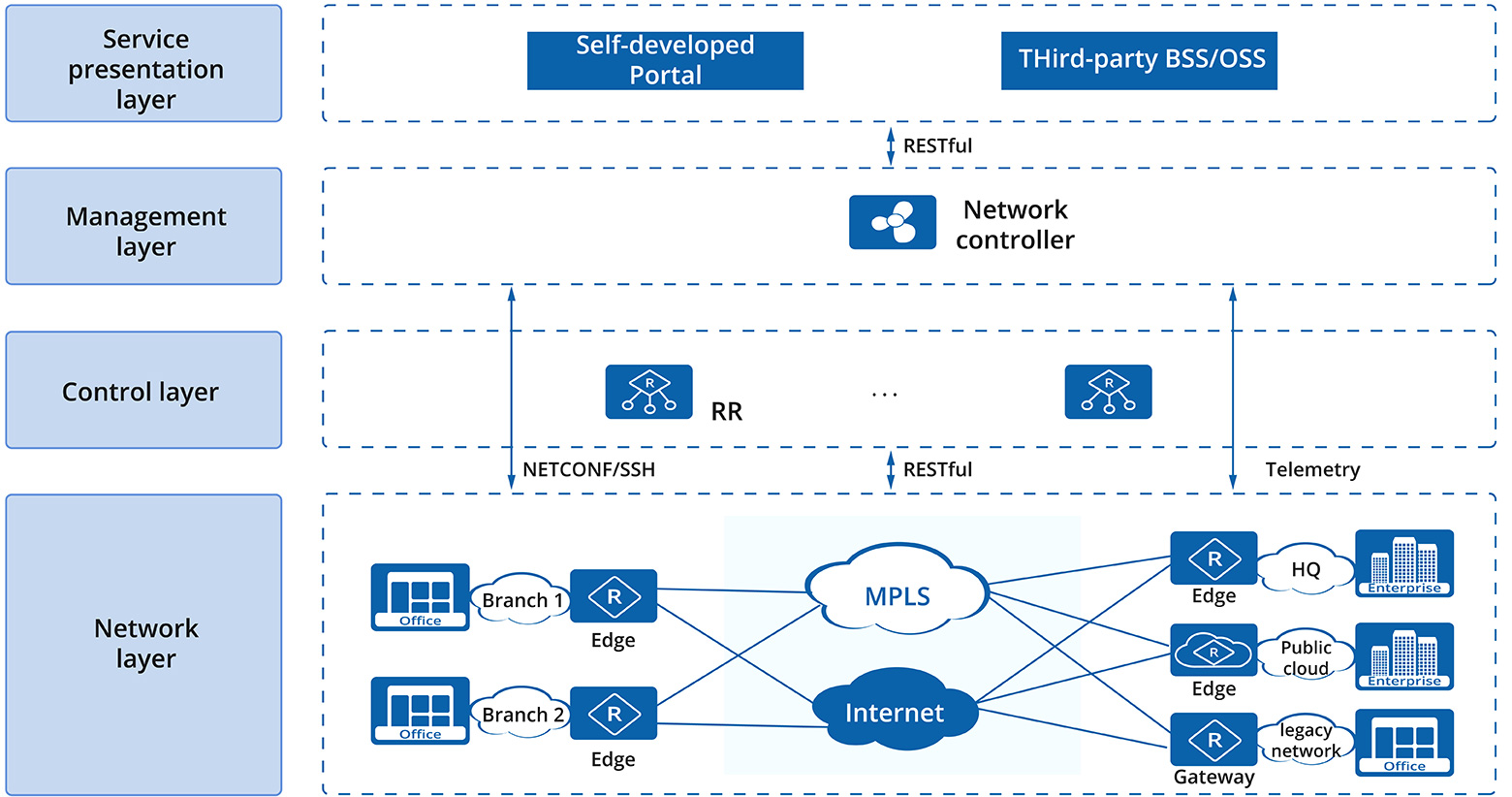
Key capabilities most SD-WAN platforms offer:
Application-aware routing — recognize specific application traffic (Zoom, Microsoft 365, Salesforce) and route it to the optimal path regardless of IP address.
Link bonding — combine multiple circuits for higher aggregate bandwidth.
Zero-touch provisioning — new sites can be brought online by shipping a pre-configured appliance, with the device calling home for its configuration on first boot.
Centralized management — all sites managed from a single dashboard with visibility into performance across the entire WAN.
For organizations with multiple offices that are overpaying for MPLS, or that have reliability problems with a single internet circuit, SD-WAN is often the right answer. For single-site organizations, standard dual-WAN failover on a firewall may be sufficient without the added complexity.